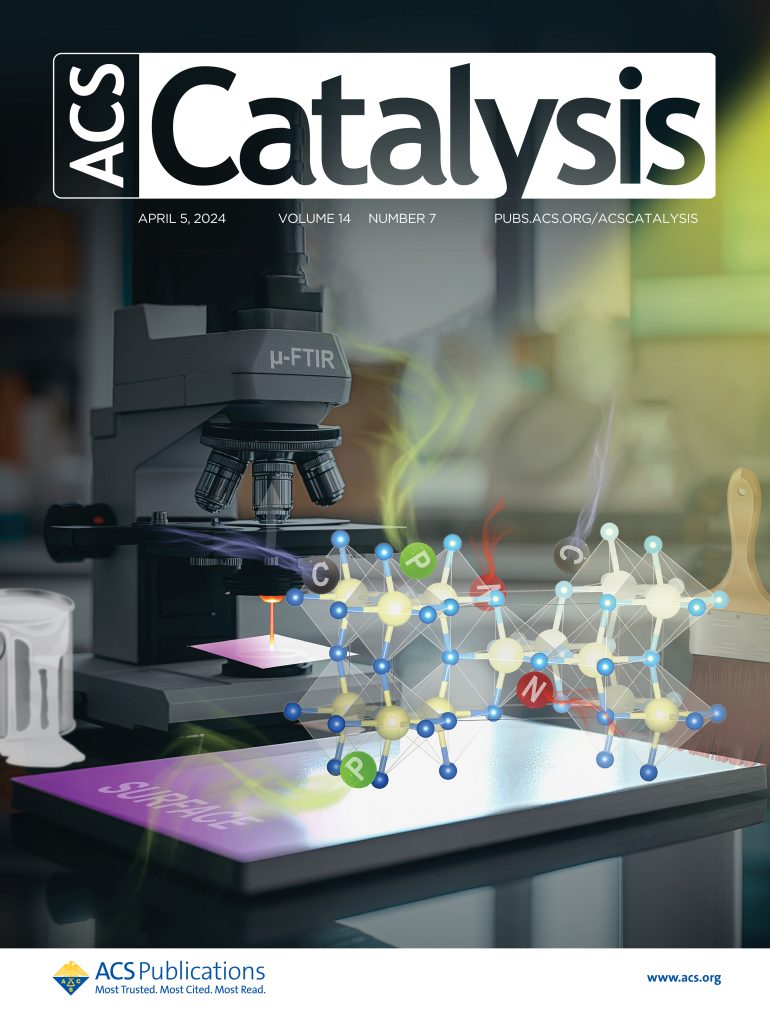
Title: Highly Stable Self-Cleaning Paints Based on Waste-Valorized PNC-Doped TiO2 Nanoparticles
Authors: Qaisar Maqbool, Orlando Favoni, Thomas Wicht, Niusha Lasemi, Simona Sabbatini, Michael Stöger-Pollach, Maria Letizia Ruello, Francesca Tittarelli, and Günther Rupprechter
Date: 03/15/2024
Working Group: GAPG-2/WG1
Grant Period: GAPG-1: Communication Strategy
Grant Period Goal (number): 1, 3, 4, 6
Covered deliverables from the MoU (number): 015/22
Countries involved: Austria, Italy
Number of female/young/ITC coauthors: 4/3/0
Abstract: Adding photocatalytically active TiO2 nanoparticles (NPs) to polymeric paints is a feasible route toward self-cleaning coatings. While paint modification by TiO2-NPs may improve photoactivity, it may also cause polymer degradation and release of toxic volatile organic compounds. To counterbalance adverse effects, a synthesis method for nonmetal (P, N, and C)-doped TiO2-NPs is introduced, based purely on waste valorization. PNC-doped TiO2-NP characterization by vibrational and photoelectron spectroscopy, electron microscopy, diffraction, and thermal analysis suggests that TiO2-NPs were modified with phosphate (P═O), imine species (R═N-R), and carbon, which also hindered the anatase/rutile phase transformation, even upon 700 °C calcination. When added to water-based paints, PNC-doped TiO2-NPs achieved 96% removal of surface-adsorbed pollutants under natural sunlight or UV, paralleled by stability of the paint formulation, as confirmed by micro-Fourier transform infrared (FTIR) surface analysis. The origin of the photoinduced self-cleaning properties was rationalized by three-dimensional (3D) and synchronous photoluminescence spectroscopy, indicating that the dopants led to 7.3 times stronger inhibition of photoinduced e–/h+ recombination when compared to a benchmark P25 photocatalyst.